He Is Safe.
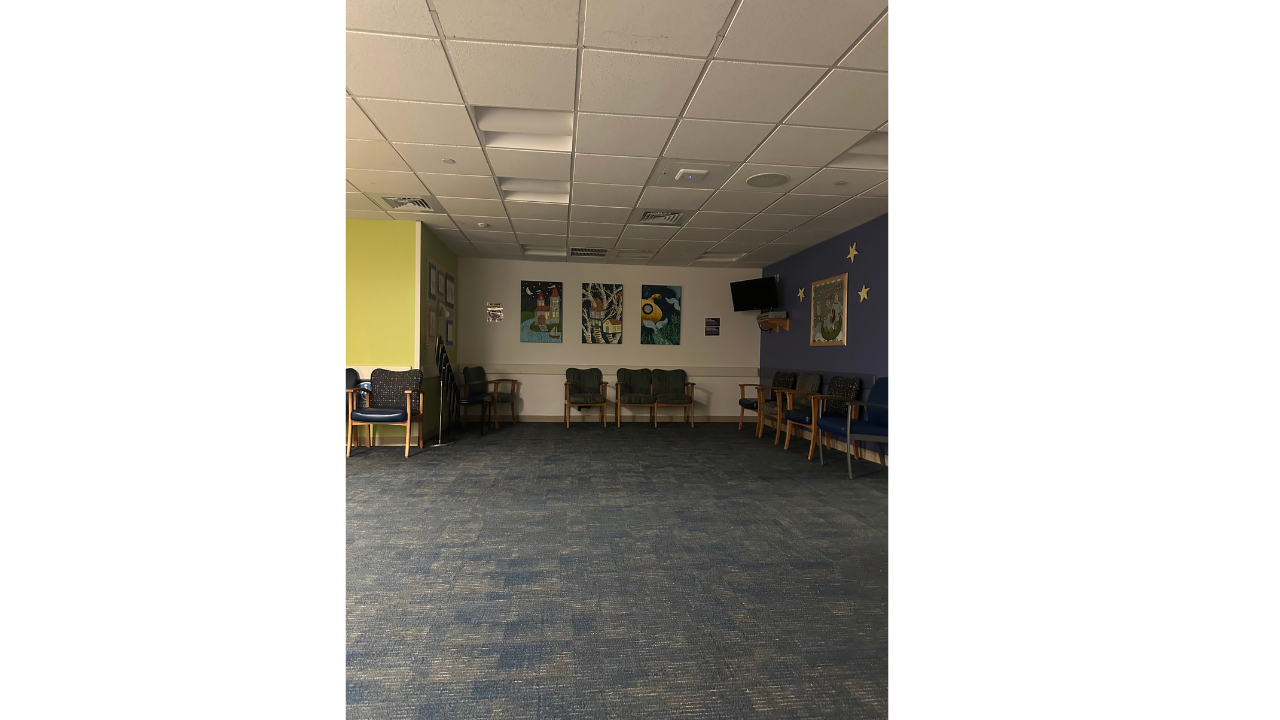
I sat in the dark stillness of the quiet waiting room, Logan just feet away in the MRI machine, awaiting the results of his X-rays. It was after hours. The hustle of the day was long gone. It was just me, a giant empty room, and my thoughts.
It didn’t take long before the tears came.
For the first time in hours, my body began to process what had unfolded. My mind raced as I replayed everything.
Guilt surfaced first.
Guilt
I hate everything about FND - the delicate balance of not drawing attention to dysregulation while still holding space for regulation to happen. As a mother, it goes against every instinct in my body. As a clinician, I battle “mom brain,” knowing the science and understanding that sometimes the only thing I can do is observe.
The problem is the guilt that follows - because when a true injury happens, you don’t always know if it’s FND or something acute and emergent. And that distinction matters.
The Fall
When Logan fell, I had no idea.
Physically, I can’t climb, so I sat on the sidelines while they all had fun. He was out of my sight, on the other side of the wall. Earlier that afternoon, we had already had an episode of dysregulation - frustration mixed with boundary-holding. Necessary work for healing in the face of medical uncertainty. But exhausting nonetheless. Not just for Logan… for me too.
I walked to the other side of the gym to wash my hands and passed Logan lying on a mat beneath the bouldering area. I assumed he was tired, resting. We were planning to leave soon, so I didn’t think much of it.
Jax and Addie were excited to show me what they had accomplished. Off to the side, Logan remained unmoved. Unphased.
I asked Andrew if Logan was okay. He shrugged. This has been our life for a long time.
It was getting late. We had planned to walk back for dinner.
I asked Andrew to help Logan up while I packed our things. He came back and said, “He can’t get up.”
I remember saying, What do you mean he can’t get up?
He told me Logan had fallen and couldn’t move.
I don’t remember panic. I think I slipped into clinician mode. Ready to assess.
The mats beneath the bouldering area are thick - but he fell nearly 15 feet. He struggled to find words. From what I gathered, he landed on his tailbone and lower back, felt compression in his spine, and fell backward. He couldn’t move. Couldn’t stand. He had sensation in his legs, but no motor function, numb, like when you sit on your legs too long.
When I tried sliding my hand beneath his back, he tensed instantly, begging me to stop. Moving his left arm brought him to tears. He could only move his right arm.
I assessed him again. Jax and Addie watched silently as I spoke softly, explaining what would happen next. I told him I needed to call the paramedics.
He begged me not to.
He didn’t want attention. He had finally found something that made him happy. Another medical setback felt unbearable in a space he was thriving.
But we didn’t have a choice.
I walked to the front desk and stumbled over my words, asking him to call 911. I’ve called emergency services countless times in urgent care - but this time, I didn’t even know where we were. My phone still carries a Connecticut area code.
As he dialed, I saw fear in his eyes.
I guided the questions, explained I was a nurse practitioner, and requested spinal precautions. I knew the questions they were asking him and he had no idea how to answer. Addie stood nearby, unsure of what to do. I asked her to gather Logan’s things - her crisis task.
Back with Logan, Jax sat at his side. I could see the concern and fear in his face and body. I explained that many people would arrive - fire, police, paramedics. Enough to make a terrifying situation even more overwhelming.
I gave report to the first responder like muscle memory - except this time I started with, He has FND and AMPS.
I didn’t even realize I said it first.
But immediately, they understood.
For the first time, I wasn’t met with confusion. Just quiet reassurance.
In the ambulance, the paramedic shared that his girlfriend also had FND. Suddenly, this massive city felt smaller. He understood the weight we carried daily.
The Trauma Bay
We arrived at the trauma bay, I wasn’t prepared for that.
The Smith Family Emergency Trauma Center.
Trauma Center hit me like a gut punch sucking the air out of my lungs.
On the other side of those doors was controlled chaos - ultrasound machines, attending physicians, synchronized teams. They transferred him with precision, and I was transported back to my operating room days - only this time, it was my child asking if he would ever climb again.
I told them I was a nurse practitioner - something I usually keep tucked away - but this time it mattered. His history is complex. The basics were enough. Everything else was a novel.
I watched as the trauma attending worked alongside the ultrasound technician, scanning his abdomen and quietly reassuring me there was no free fluid. To Logan, he had no idea what that meant. To me, I knew exactly what they were looking for - internal bleeding. The kind of injuries that decide, in minutes, whether someone goes straight to the operating room with trauma general surgery on standby.
Organ by organ, they cleared him.
Each pause felt like suspended breath. Each confirmation a fragile release.
I didn’t explain any of this to Logan at the time. I wouldn’t until much later, when he finally asked what they had been doing and why it had felt so urgent.
No free fluid meant No internal bleeding.
Next came X-rays - lots of X-rays - knowing all along that an MRI would still be necessary.
Back-to-back assessments followed as attendings rotated in and out of the room, each representing a different trauma specialty: neurosurgery, general surgery, and honestly - I don’t even remember who the other one was.
The Crash
I remember the exact moment the adrenaline wore off.
It had been almost four hours since he fell.
The neurosurgeon was midway through his head-to-toe assessment, speaking steadily as I stood near Logan’s head, boxed in by equipment and bodies. Suddenly, my vision began to go black.
Hold on, I told myself. He’s almost done. You can’t pass out right now. Logan needs you.
A hot flash surged through my body. Sweat began dripping down my spine. My legs felt weak, unstable. I strained to focus on the words coming out of his mouth, praying I could stand long enough for him to finish and move so I could reach the chair just two feet away.
I felt my whole body crashing.
I knew I didn’t have long. All I could think was, Please hurry up and move.
When he finally stepped aside, I collapsed into the chair as he continued speaking. At least if I passed out there, I’d be safe.
The moment he left the room, I blurted out, “Logan, press the button for the nurse.”
He looked confused. Why?
I kept repeating it - Press it now. I’m going to pass out.
He panicked, unable to move, reaching toward me with his one working arm, begging me not to pass out because he needed me.
I held on. Barely.
I had less than a minute. I knew it.
A nursing aide walked in, took one look at me, and said, “OH… Hi. I just met you, Momma and you are pale as a ghost. What’s going on?”
I told her I was crashing and needed something to stabilize my blood sugar. I hadn’t eaten since morning, and the adrenaline crash had taken me out.
She understood immediately.
I couldn’t even open the juice she handed me. I chugged it, and the wave of nausea hit hard. The plus side of having a medically complex child is that Zofran is always in my bag.
The priority shifted from Logan to stabilizing Mom.
In all the times I’ve stood at Logan’s side through countless emergency room visits, I had never once come close to passing out.
But my body… it had finally met its match.
It was tired. My nervous system was burnt out.
I didn’t stand a chance.
That’s what trauma does.
It stacks.
Until you burn out… or worse.
I stayed behind as they wheeled Logan off for X-rays. At this point, I was considered a fall risk, and I knew there was nothing I could do except take care of myself - so that I could take care of him.
No sooner had he returned from X-ray than they were ready to take him to MRI.
One major problem remained: he still didn’t have an IV.
Getting one had become a futile battle - even for the most skilled hands. He was significantly dehydrated by this point and would ultimately require a specialized team, but MRI was waiting and couldn’t be delayed. Instead of IV medication, he was given alprazolam through his G-tube to help manage the agitation that was slowly building from the pain and the growing discomfort of the C-spine collar.
We made our way up to MRI through unfamiliar hallways - corridors I had never walked before. As they transferred him yet again onto the MRI stretcher, I instinctively reached for his feet to help guide the rest of his body.
It was muscle memory.
The same way I had done it a thousand times before at Yale - assisting patients out of surgery, lives suspended between what they had been and what they were waking up to on the other side of the operating room doors. Still groggy from anesthesia, unaware of the road ahead, while I already knew their prognosis.
That work - surgical oncology - had been some of the most emotionally demanding of my career, yet also among the most rewarding roles I ever held in medicine.
In that moment, standing there with my hands on my child’s feet, I understood the weight of it in a way I never had before.
I had no idea what the next hour would hold as the door closed behind me and I was directed into that giant, dark room.
The Waiting
Even now - more than two weeks later - as I write this, my body tenses. There’s a pit in my stomach, and I can feel the tears welling up. I’m sitting in a busy coffee shop, yet the deafening silence of that moment surrounds me again. I’m transported back - searching the room through the darkness.
I had been left there. No offer to turn on a light. Just stillness.
Texts came through one by one from back home as people flooded me with prayers and messages of hope. So many prayers rising, flooding heaven’s gates, speaking peace into the unknown.
The results of his X-rays posted while he was still in the MRI.
My heart sank. The pit in my stomach deepened. That room felt larger - more isolating. I remember reading the words on his cervical spine X-ray that suggested something could be seriously wrong.
And it wasn’t just any level - it was C1. C2.
The most critical vertebrae.
The most life-threatening.
One wrong movement and his life could be forever changed.
Before I could fully process that information, I saw another concern listed - this time in his lumbar spine.
His fate hinged on the results of those scans and a mighty God doing what only He can do.
I remember texting Andrew the words something may be seriously wrong. My thoughts were racing and, at the same time, completely blank. Numb.
As if God knew how to protect me - the gift and the curse of knowing more than you ever wanted to know.
All I could do was wait.
In the darkness.
Alone.
When he finally came out of the MRI, my mind was still swirling, and I didn’t even realize at first that he was moving his left arm. By the time we made it back to his room in the ER, he had begun moving his right leg, mostly because his hip was in so much pain.
He was agitated by the collar and kept asking for it to be removed.
I remember the harsh tone of the nurse who walked in, not out of cruelty, but because she understood the gravity of what we were still waiting on. I remember her saying to him, “Trust me, you don’t want to risk the rest of your life before we know it’s safe to remove this. The doctors will be in soon.”
Her voice was firm, urgency layered beneath every word.
He didn’t understand.
I did.
And her tone frightened me just as much.
As medical providers, we often know how potentially life-altering a situation may be long before the family is told. This was one of those moments. She knew the risk and was trying to convey its seriousness without terrifying him.
Eventually, once the MRI results posted, the doctor came in and let out a visible sigh of relief as she told us everything was normal - his spine was okay.
I watched her shoulders soften as she told Logan it was safe to remove the collar.
And in that surreal moment - when they spoke the words your body is safe - while removing the collar, sensation returned to his body.
He sat up.
He moved both legs.
As if nothing had happened.
I remember sitting there feeling angry and relieved at the same time.
Frustrated.
Confused.
That’s the beast of FND.
That’s the reality we have lived for the past year.
Safe
God created us - knit us together in our mother’s womb - and knew our inner workings before the world was even formed. And in those intricate details of creation, He designed this fascinating system within our bodies that is meant to protect us.
And yet, at times, it can fail us.
Not because His design isn’t perfect - but because the world we live in isn’t.
We learn survival early. Our nervous systems adapt to overload and constant stimulation. A system designed to protect us in danger and allow us to rest once safety is recognized becomes stuck in overdrive. Our fight-or-flight response when threat is real and present. And at the same time, our rest-and-digest response - our parachute, our safety net for healing.
But the world we live in doesn’t honor that healing. It doesn’t make space for rest. It rarely teaches us how to reset or reminds our bodies that we are safe.
In that moment, his brain finally received the message that he was safe - and it sent that signal to his nervous system. And just like that, his body responded exactly as God designed it to.
He froze.
Then he reset.
Infuriatingly beautiful, when I look back at his hand in that moment.
We were admitted overnight. Sore. Bruised. Safe.
But otherwise unscathed.
His instinct is to rest and retreat into old patterns when pain shows up. So naturally, he didn’t plan on returning to clinic and resisted the idea altogether - but it was non-negotiable.
He was assessed, and his team worked with him for the next eight hours.
When I returned to pick him up, I was stunned to learn he had ended his day boxing, and had been told, “Keep climbing. Keep moving. Your body is functioning.”
He was proud of himself.
I was proud of him.
Confused. Relieved. Frustrated.
But most of all, deeply grateful for a medical team that has been teaching us one of the most powerful lessons we’ve learned:
He is safe.
Safe.
Truly safe for the first time in a long time…
